
Anneal Copper (Soften Work-Hardened Metal)
Last edited · 92a9d6f · tewelde
Summary
Copper has a property that surprises beginners: hammering it makes it harder. Each blow stiffens the metal a little, until it stops moving under the hammer and starts to crack instead. This stiffening is called work-hardening.
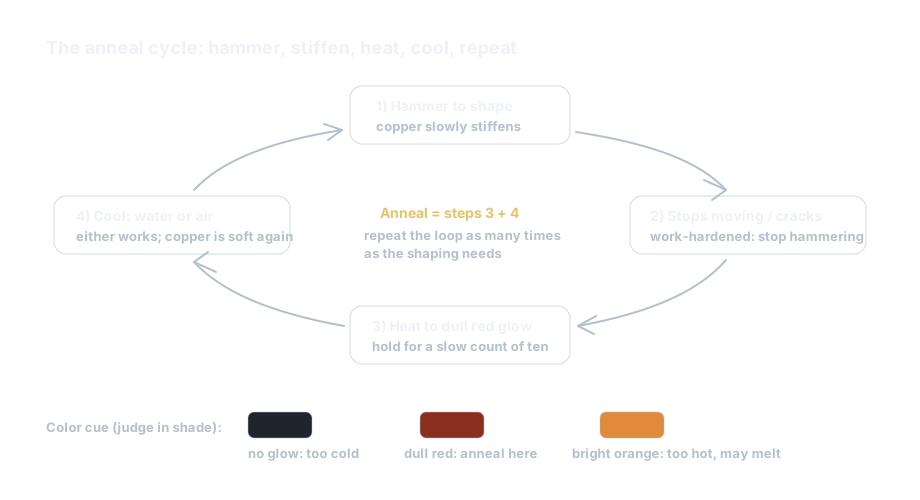
Annealing is the cure: heat the copper until it glows dull red, then cool it. The heat lets the metal's internal structure relax, and the copper comes back soft and workable — as many times as you need. Hammer, stiffen, anneal, repeat: this cycle is the basic rhythm of all copper working, and you cannot shape a tool like an awl without it.
Terms used in this article
- Work-hardening — metal getting stiffer and more brittle as it is bent or hammered. You can feel it: bend a copper strip back and forth at the same spot and each bend gets harder, until it snaps.
- Annealing — heating metal to a set glow and cooling it, to undo work-hardening and make it soft again.
- Dull red — the faintest visible glow: clearly red in shade or dim light, almost invisible in bright sunlight.
- Quenching — cooling hot metal quickly in water. (For copper this is safe and convenient; unlike steel, it does not harden copper.)
Prerequisites
- Copper to work: Smelt Copper Prills (Small Batch)
- Fire: Make Fire (Hand Drill)
- Handling hot metal: Make Green-Wood Tongs
A plain wood fire with good coals is enough; a charcoal bed (Make Charcoal Fuel (Pit Method)) reaches annealing heat faster and more evenly.
Diagram
Materials
- The copper piece being worked
- An established bed of glowing coals
- Green-wood tongs (Make Green-Wood Tongs) or two sticks for handling hot metal
- Water in a shell, cup, or pit (optional, for quenching)
Steps
1) Recognize when to anneal
Anneal whenever any of these appear:
- The metal stops spreading under blows that used to move it.
- Hammer blows start to bounce or ring instead of denting.
- Fine cracks appear at edges.
Do not push past these signs — cracks that grow deep cannot be healed by annealing.
2) Heat to dull red
- Place the copper in or just under glowing coals.
- Watch from shade if the day is bright: you are waiting for the metal to show a dull red glow.
- Hold it at that glow for a slow count of ten. There is no need to get it brighter; bright orange risks melting small pieces.
Backup cues when the light is too bright to judge color: a dry grass stem or thin wood sliver touched to the metal should char black within a breath or two, and your palm held a handspan above the piece should sting with heat immediately. If both happen, the piece is at or near annealing heat.
3) Cool
Either way works for copper:
- Quench: grip with tongs and dip fully into water. Fast and lets you continue immediately.
- Air cool: set it on a stone and wait until it can be touched. Slower; otherwise the same result.
4) Resume hammering
The copper should now dent and spread easily again. Work until it stiffens, then repeat from step 2. Expect to anneal many times while shaping a tool — every few minutes of hammering is normal.
Verification
- Before annealing: a test blow bounces; the metal resists.
- After annealing: the same test blow leaves a clear dent and the metal feels "dead" (no spring).
The bend test
Worth doing until you trust your eye — it is also the whole work-hardening lesson in miniature:
- Hammer a scrap of the same copper into a thin strip, finger-length and grass-blade thin at one end.
- Right after annealing it, bend the thin end with your fingers: it should fold easily and stay folded.
- Bend it back and forth a few more times at the same spot: feel it stiffen with each bend — that stiffening is work-hardening happening in your hand. Keep going and it snaps.
- Anneal the strip and bend again: soft again. This cycle is exactly what happens to the tool you are forging.
Safety
- Hot copper looks exactly like cold copper in daylight. Treat every piece near the fire as hot; move pieces only with tongs or sticks.
- Quenching makes a burst of steam; keep your face away and dip the piece, not your hand.
- Small prills heat through in seconds and can reach melting; keep them at the edge of the coals, not the center.
Troubleshooting
- Metal still cracks right after annealing: it never reached dull red (check in shade), or the cracks were already deep — cut/grind back past the cracked zone and continue.
- Piece melted or slumped: too hot or too long in the coals; smaller pieces need only seconds at the edge of the fire.
- Surface turns black and scaly: normal oxide from heating; knock or rub it off on a coarse stone before hammering, or it gets hammered into the surface.
Variants
- Anneal in place during forging: for large pieces, you can heat just the region being worked.
- Final hardness on purpose: after the last shaping, skip the final anneal and lightly cold-hammer the working edge or tip — controlled work-hardening makes it stiffer (used in Make a Copper Awl (Metal Tool)).